"Every Second Counts": Lessons on Learning and Leading from The Bear
Time is precious for students and educators; how do we make the most of it?

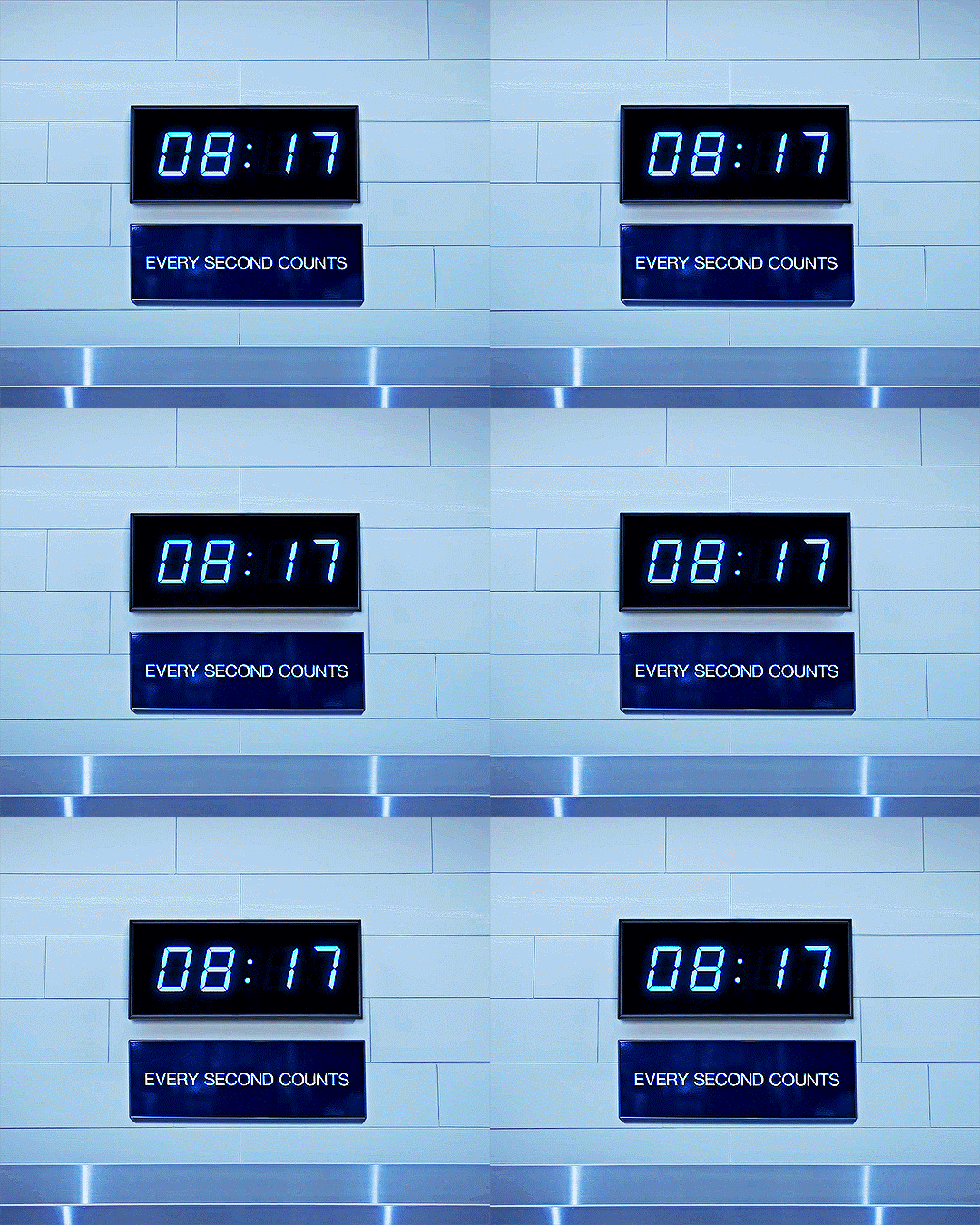
As a school principal, I lived for routines. Not just classroom routines, but my routines as a leader: greeting students and shaking their hands at arrival each morning, writing my weekly announcements on Thursday evenings and sending them off to the team on Friday mornings, preparing for our weekly community circle and our Wednesday staff meetings. Oh, and the weekly ritual of singing a very silly song to the kids at lunch to commemorate pizza Fridays.
In the weekly announcements, I’d include a one-pager with key events for the week. At the top, I always reserved space for some variation on our core values or instructional focus. One year we made new year’s resolutions as a team, so I typed those out at the top, including one that read:
“At [our school], we resolve to make the most of every minute.”
I’d then print off the one-pager and hang it in key places around the school where teachers could easily reference it. In a fairly cringeworthy move in retrospect, I’d even hang the one-pager in the staff bathroom thinking that my team might like to be reminded of our PD schedule in their most solitary moments. It was well-intentioned, surely, but I imagine my quite literal application of making the most of every minute may have been a bit much.
I hadn’t thought about any of this in some time, but in catching up on episodes of The Bear, I found myself sitting with the meaning of making the most of every minute. Season 1’s tagline was “let it rip,” but season 2 and 3 have been preoccupied with another mantra: “EVERY SECOND COUNTS.” The viewer first sees these words printed in all caps below the whiteboard calendar reminding Carmy and team of their extraordinary timeline to open a restaurant in 90 days. And without giving away spoilers, the words reappear multiple times throughout the episodes that follow, often positioned below a large-display clock unceasingly tracking the minutes, hours, coffee spoons, what have you.
Throughout The Bear it becomes clear that this mantra has two distinct meanings. For one, it functions to focus individuals on a time-bound goal. In season 2, the team only has so many minutes to get the restaurant ready for its first service; not a single one can be wasted in the relentless pursuit of that goal. This requires a level of discipline and focus that stretches many of the characters to and beyond their limits. Some rise to the moment in ways that allow them to see themselves and be seen by others with their best qualities magnified; others realize too late that they haven’t shown up for their team in the ways they needed to.
These realizations tie to the second meaning of “every second counts,” which underscores that making the most of every minute is not just about single-mindedly launching ourselves toward a future aspiration with ruthless efficiency but also about how we engage in the present. Process matters as much as outcome, it turns out. Whether and how each moment is imbued with meaning, how we nurture our purpose, matters. Characters who explore this second meaning recognize that there’s more to life than interminably battling the clock. By the end of season 3, some characters make choices that at first surprise their peers but that enable them to pursue a different or more expansive set of dreams. Others revisit past traumas and confront the mistreatment that was normalized in their quest for honors and accolades. The audience is left wondering whether our protagonist will be able to break the cycle once inflicted upon him – and in doing so pursue excellence while caring for himself and others in ways that bring out the best in everyone.
So what does this have to do with schools and schooling? Here are a few more practical thoughts for school and system leaders:
Students’ and educators’ time is too precious to be wasted. In most schools, there is a lot of downtime. School and system leaders have a responsibility to ensure that time is used well for everyone in the school community. They can do this by:
Examining instructional routines and identifying places where processes and procedures can be streamlined to protect time for learning;
Setting expectations and modeling that both class periods and teacher meetings start on time and purposefully drive toward outcomes;
Blocking and tackling so that educators’ time with their students is not disrupted by miscellaneous announcements or interruptions;
Honing their planning muscle so that both educators and students are not left waiting for administrative direction on how to enact key curricular or instructional components or prepare for school events or initiatives;
Ensuring that time for assessing learning is focused and does not unnecessarily eat up time for instruction; if there is not a clear plan for how assessment data will be used, STOP assessing and preserve that time for teaching!
The school day must be organized around worthy learning experiences. As Oliver Burkeman writes in his book Four Thousand Weeks: Time Management for Mortals, “the world is bursting with wonder, and yet it’s the rare productivity guru who seems to have considered the possibility that the ultimate point of all our frenetic doing might be to experience more of that wonder.” Efficient routines will only get us so far if the core of our school day is not centered around meaningful learning experiences for our students. Students come to school bursting with curiosity. Too often schools stifle that curiosity rather than foster it. If we truly want to make every second count, we need to lead by nurturing students’ ideas and intellect. We need to care about whether each day, each set of lessons, allows students to experience more of the wonder they inherently bring to texts and tasks, or dulls it in service of marching toward benchmarks they’ve not been sufficiently invested in. The same is true of teacher professional learning opportunities. Drudgery will not get us to where we want to go; resist it and find ways to cultivate wonder as a powerful ingredient to meeting and exceeding educational goals.
Leaders have a responsibility to model both efficient and purposeful use of time. I’ve written previously about the perils of what Kim Marshall has termed “hyperactive superficial principal syndrome.” As a school or system leader, it’s easy to get sucked into a never-ending cycle of whack-a-mole, solving problems and fighting fires and never preserving time for oneself to consider whether there might be a way to prevent the fire before it becomes a conflagration. Leaders must recognize their own agency in choosing to spend their time tackling symptoms versus investing in uncovering root cause. When leaders do the latter, and preserve time for reflection and strategic thinking, it can result in new ways of being and doing that ultimately allow them to make the most of their time in service to teachers, students, and families.
My favorite line from The Bear comes from my favorite character, Sydney, who asks with unerring earnestness, “why can’t we put everything we have into everything we can?” Just as we see her and others grapple with this question, wondering both about the limits of what they can give and whether their pursuits are worthy of their effort, school and system leaders can attempt to find an answer in the series’ “every second counts” mantra. In doing so, we must consider that each moment counts not only because it puts us on the path to achieving a future ambition, but also because it holds meaning and purpose in the present.